Two apps with the same idea can cost very different amounts. Here is what really drives the price, and how to keep it sensible.
The cost of a mobile app is driven by a handful of things: how many features it has, how many platforms it runs on, whether it needs a custom backend and admin panel, how many outside services it connects to, and how polished the design must be. When people ask about app development cost in Egypt, the honest answer is that two apps with the same idea can differ hugely in scope, and scope is what you pay for.
This guide explains each cost driver in plain language, so you can plan a sensible first version and have a better conversation with any development team.
Why there is no single price for an app
“How much does an app cost?” is a bit like “How much does a house cost?” It depends on the size, the finish, the location and what is inside. A simple app that shows your menu and takes bookings is a very different job from a delivery app with live tracking, payments, driver accounts and a dashboard.
That is why a serious agency will ask questions before giving you a number. Anyone who quotes a firm figure after a two-line message is either guessing or planning to cut corners later.
The main factors behind app development cost in Egypt
Here are the drivers that make the biggest difference, roughly in order of impact.
| Cost driver | Keeps cost lower | Pushes cost higher |
|---|---|---|
| Features | A focused set of core screens | Many user roles, complex flows, real-time features |
| Platforms | One cross-platform codebase | Separate native iOS and Android apps, plus tablet and web |
| Backend | Simple content or existing system | Custom server, database, admin panel and reports |
| Integrations | Few or standard services | Payments, maps, ERP, CRM, couriers, government services |
| Design | Clean layouts using standard components | Custom illustrations, animations and motion |
| Languages | One language | Full Arabic and English with right-to-left layouts |
Features and user roles
Every feature means screens to design, logic to build and cases to test. User roles multiply that. A marketplace, for example, may need a customer app, a vendor app or portal, and an admin dashboard, each with its own permissions.
Platforms: native or cross-platform
Cross-platform frameworks such as Flutter or React Native let one codebase run on both iOS and Android. For many business apps, that is a sensible way to control cost and time. Native development makes sense when you need deep access to device features, very heavy graphics or the absolute best performance on each platform.
The backend nobody sees
Most apps need more than what is on the phone. There is usually a server, a database, an API, notifications, and an admin panel where your team manages content, orders or users. This hidden part is often a large share of the work, and it is the part people forget when they compare an app to a “simple” one they have seen.
Design, languages and accessibility
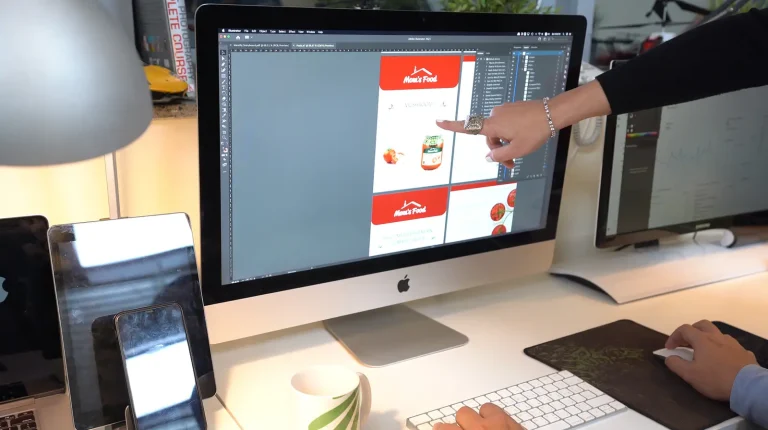
Good design is not decoration. It is how quickly a customer understands what to do. A clean, consistent interface built from a proper design system costs less to build and maintain than one where every screen is a one-off.
For businesses in Egypt and the Gulf, bilingual apps are common. Proper Arabic support means right-to-left layouts, mirrored navigation, Arabic typography that is actually readable, and content that is written, not machine-translated. It adds work, but it is usually essential if your customers think and shop in Arabic.
Hidden costs to plan for
The build is only part of the picture. When you budget, include:
- App store accounts — Apple and Google both charge developer account fees.
- Hosting and cloud services — servers, storage, databases and backups.
- Third-party services — SMS, maps, email, analytics and payment processing fees.
- Updates — new iOS and Android versions arrive every year, and apps need adjusting.
- New features — once real users arrive, they will ask for things you did not expect.
- Marketing — an app no one downloads is an expensive secret.
At Bit&Bits, every app comes with one year of full technical support after launch, and after that you can choose an optional support package that fits how actively you plan to develop the app.
How to keep costs under control
You do not need a smaller dream. You need a smarter first step. A few habits that consistently help:
- Start with a focused first version. Build the features that prove the idea and bring revenue. Keep the wish list for version two.
- Write down what “done” means. A clear scope with screens, user roles and integrations avoids surprises for both sides.
- Consider whether you need an app at all. Sometimes a fast, mobile-friendly website does the job for a lower cost, with an app added later.
- Reuse what exists. If you already have a website, CRM or ERP, the app can often connect to it instead of rebuilding everything.
- Stay involved. Quick feedback on designs and test builds saves weeks of rework.
Timelines and how we work
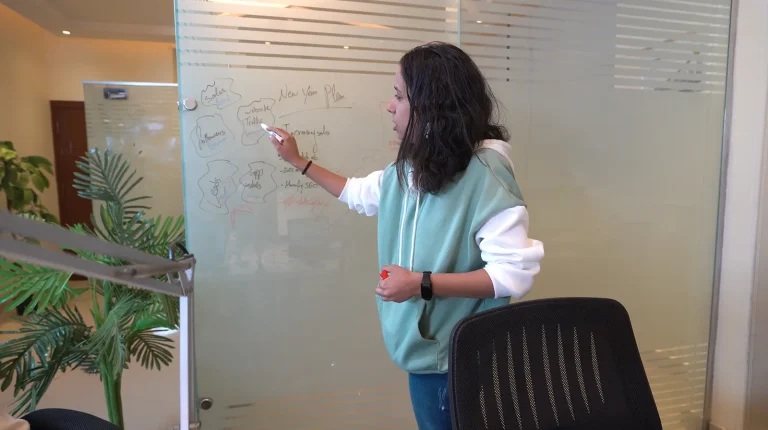
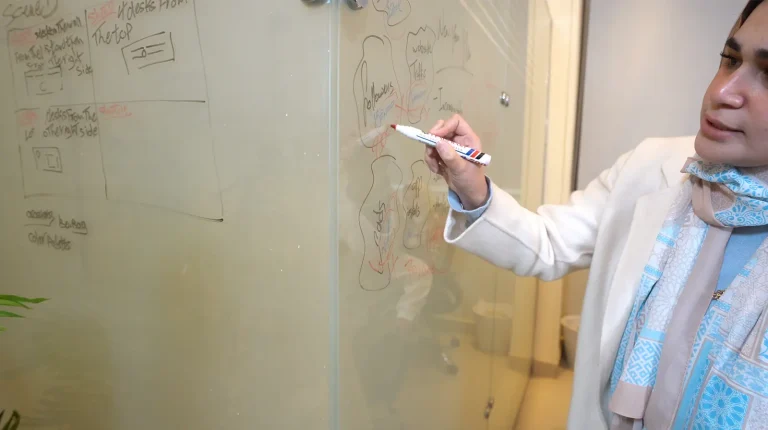
Time and cost go hand in hand. A simple app can be ready in weeks; a larger app with a custom backend can take a couple of months or more, depending on features. We usually work in stages: discovery and scope, design, development in short cycles with test builds you can try on your own phone, then testing, store submission and launch.
If you want a rough idea before talking to anyone, try our cost estimator. For the full picture of what we build, see our mobile app development service, and if your idea is really a business system rather than a consumer app, our custom software development page may be the better starting point.
Frequently asked questions
Is app development cost in Egypt lower than in Europe or the Gulf?
Generally, building with a team in Egypt has a lower operational cost than in Europe or the Gulf. The bigger saving, though, comes from a clear scope and a focused first version.
Can I start with one platform and add the other later?
Yes. With a cross-platform approach, adding the second platform is usually straightforward. With native development, it means building a second app, so it is worth deciding early.
Who owns the app and the source code?
This should always be agreed in writing before the project starts. Make sure your contract is clear about ownership of the code, the designs and the store accounts.
If you have an app idea and want an honest view on scope and cost, we would love to hear it. Send us a WhatsApp message or book a free consultation. No pressure, just a proper conversation about what you need and what can wait.