Arabic SEO is not English SEO translated. Here is how dialects, spelling variants, hreflang and local signals help you rank on Google in Egypt and Saudi Arabia.
Arabic SEO means optimising your website for the way people in the Arab world actually search: in Modern Standard Arabic, in local dialects, with different spellings, and often in a mix of Arabic and English. To rank in Egypt and Saudi Arabia, you need separate keyword research for each market, native Arabic content written for people rather than translated from English, a proper right-to-left website, and the technical signals that tell Google which page is meant for which country.
It is less mysterious than it sounds. Here is the approach we use, step by step.
Why Arabic SEO is different from English SEO
Arabic is one written language with many spoken ones. A shopper in Cairo and a shopper in Riyadh may want exactly the same product and type completely different words into Google. On top of that:
- Spelling varies. People often write ه instead of ة, ا instead of أ or إ, and ى instead of ي. Google is good at connecting these, but not perfect, and search volumes can differ.
- People switch languages. Many searches mix Arabic and English, or use English for technical products and Arabic for everything else.
- Some write Arabic in Latin letters. Often called Franco or Arabizi, this is common in chat and appears in searches too.
- Competition is thinner. There is far less well-made Arabic content online than English, which is good news: quality Arabic pages can stand out.
Keyword research for Egypt and Saudi Arabia
Start with how your customers talk, not with a translation of your English keywords. A few practical habits:
- Research each country separately. Set your keyword tool to Egypt, then to Saudi Arabia. The winning phrase in one is often not the winner in the other.
- Listen to your sales team. The words customers use on the phone and on WhatsApp are gold for keyword research.
- Check Google’s suggestions. Type the start of a query in Arabic and see what autocomplete and “People also ask” offer.
- Look at the results page. If the top results for a phrase are all in English, that tells you something about how people search for it.
- Group by intent. Separate people who want information from people ready to buy, and give each group the right page.
Writing Arabic content that ranks
Machine-translated pages rarely rank for long, and they rarely convert. Google rewards content that is helpful and clearly written for its audience, and Arabic readers notice stiff translation immediately.
- Write natively. Brief an Arabic writer on the topic rather than handing over English copy to translate.
- Pick a register. Most business pages use clear Modern Standard Arabic. Marketing copy and social posts can lean closer to the local dialect where it suits the brand.
- Use the keyword naturally. In the title, the main heading, the opening paragraph and a subheading or two. That is enough.
- Answer questions directly. Short, clear answers near the top of the page help with featured snippets and AI-generated answers.
Technical Arabic SEO: RTL, URLs and hreflang
This is where many bilingual websites quietly lose rankings. The essentials:
| Item | What good looks like |
|---|---|
| Language and direction | Arabic pages set lang=”ar” and dir=”rtl”, with a layout designed for right-to-left, not simply mirrored |
| Separate URLs | Each language has its own URL, for example a /ar/ folder, never switched by cookie or script alone |
| hreflang | Tags linking each Arabic page to its English twin, and country versions such as ar-EG and ar-SA where content differs |
| Titles and descriptions | Written in Arabic for Arabic pages, not left in English |
| Speed and mobile | Fast loading on phones, with Arabic web fonts that do not slow the page down |
If your website was not built with this in mind, it is often worth fixing the foundations before investing in content. Our website design and development team hand-codes bilingual sites with real right-to-left layouts, SEO-ready from day one.
Local signals: showing Google where you are
For searches with local intent, like “near me” or a city name, your presence on Google Maps matters as much as your website.
- Google Business Profile. Claim and complete it for each office or branch, with your name, address and phone number written consistently.
- Reviews. Ask happy customers to leave a review, and reply to them, in Arabic when they write in Arabic.
- Location pages. If you serve both Egypt and Saudi Arabia, give each country its own page with genuinely local content, not the same text with the city swapped.
- Local links. Mentions from local directories, chambers of commerce, partners and press help Google trust your relevance in each market.
Measuring your Arabic SEO results
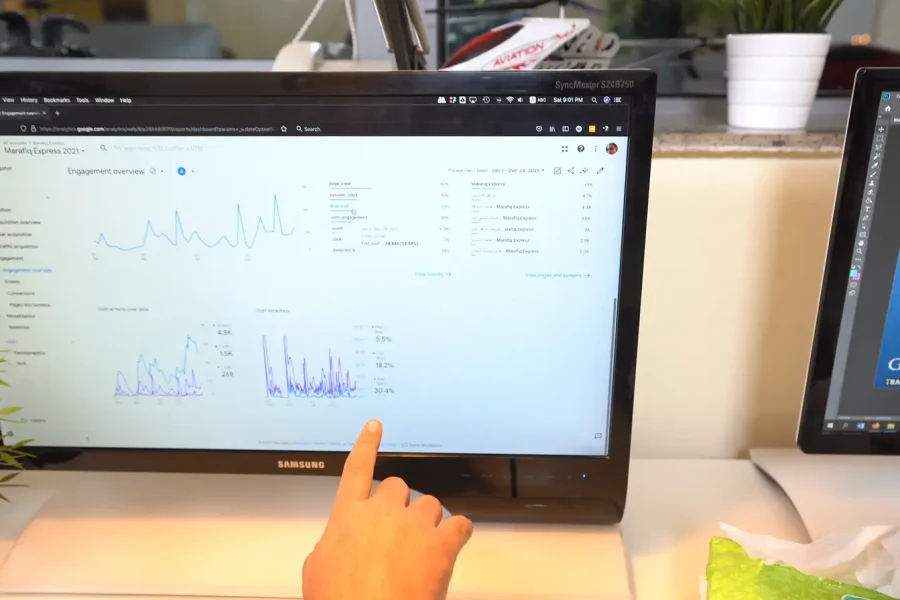
Set up Google Search Console and filter by country. You will see which Arabic queries bring impressions, which pages rank, and where you are close to page one. Those near misses are usually the quickest wins: improve the page, strengthen internal links, and watch it climb.
SEO takes time. Expect to see steady movement over months rather than days, and judge it by leads and sales, not just rankings. If you would like help, Arabic SEO is part of our digital marketing service, alongside Google Ads and social ads.
Frequently asked questions
Should I use Modern Standard Arabic or dialect for SEO?
Use clear Modern Standard Arabic for most website content, and let your keyword research tell you where dialect phrases are worth including, especially in headings and FAQs.
Do I need separate pages for Egypt and Saudi Arabia?
Only when the content, offer or wording genuinely differs. If it does, create separate pages and connect them with hreflang.
How long does Arabic SEO take to show results?
Usually a few months for meaningful movement, depending on your website’s condition, your competitors and how much content you publish.
If your Arabic pages are not pulling their weight, we would be glad to take a look. Drop us a line on WhatsApp or book a free consultation, and we will tell you honestly where the quick wins are.