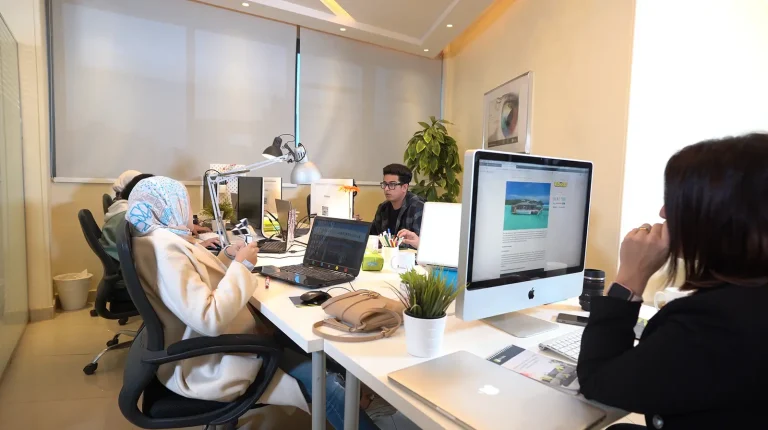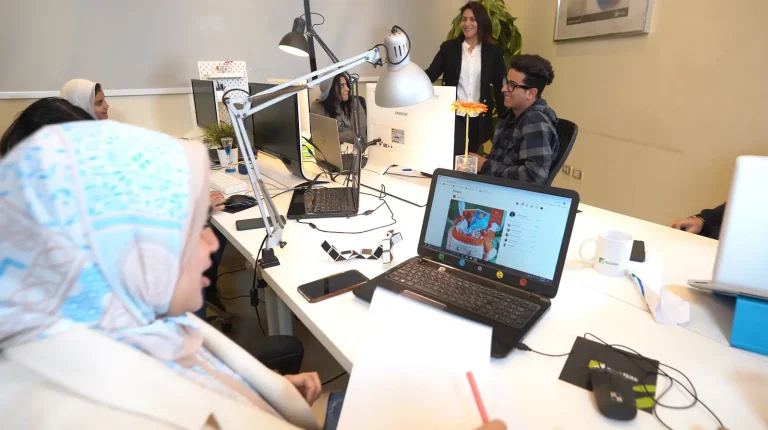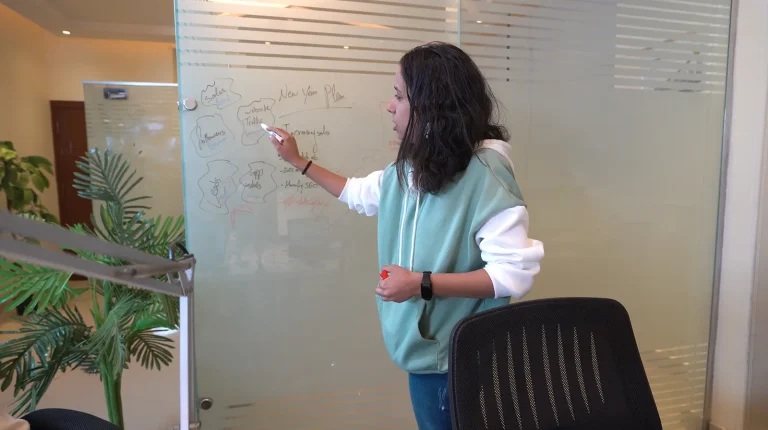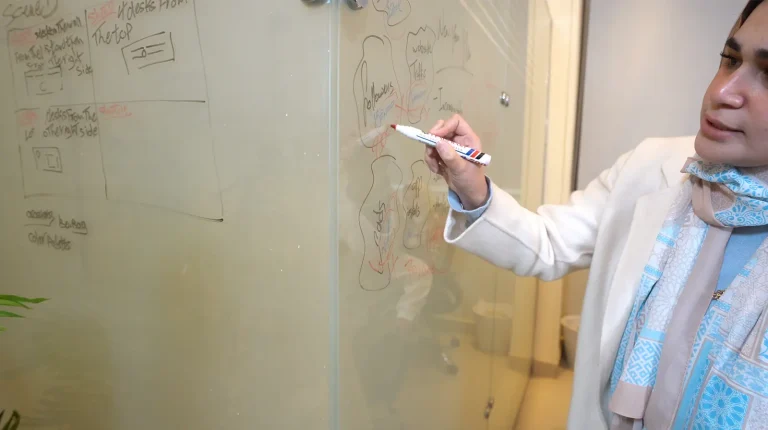
Vetting, contracts, payroll and management: a plain walk-through of what really happens when you hire remote developers in Egypt through a dedicated team model.
If you want to hire remote developers in Egypt, the simplest route is a dedicated team model: a local partner recruits, employs and pays the developer, while the developer works full time under your direction. You interview and approve every hire, you set the priorities, and your partner handles the contract, payroll and the paperwork that comes with being an employer in Egypt.
That is how we have been doing it at Bit&Bits. Below, we walk through each step, from the first job description to the monthly invoice, so you know exactly what to expect before you start.
Why companies hire remote developers in Egypt
Egypt has a large, educated talent pool, with universities producing engineering and computer science graduates every year. Many developers work in English day to day, and plenty also speak Arabic, which matters if you build products for Gulf or North African markets.
Time zones help too. Cairo overlaps well with European working hours, and it is one hour behind Saudi Arabia for most of the year. Your developer can join your stand-ups, reply on Slack in real time and hand over work before your evening.
And yes, the operational cost is lower than hiring in Europe or the Gulf. But we would not lead with that. The reason teams stay is quality: skilled people, well trained, with flexible working hours and the choice of remote, on-site or hybrid work. You can read more on why Egypt works for offshore teams.
Step one: defining the role properly
Good hiring starts with a clear brief. Before we search, we sit with you (or call, the coffee is on us either way) and agree on:
- The stack and seniority. “React developer” is a start; “mid-level React and TypeScript developer who has shipped a design system” is better.
- What the first three months look like. A new feature, a rebuild, maintenance, or a mix.
- Working hours and location. Fully remote, in our Cairo office, on-site with you, or hybrid.
- How they will be managed. Who they report to, which tools you use, and how you run sprints.
The more honest the brief, the better the shortlist. If the role is still fuzzy, we help you shape it before anyone is interviewed.
How vetting works
Vetting is where most remote hiring goes wrong, so we take our time here. A typical process looks like this:
- Sourcing. We search our own network and the wider market for people who match the brief, not just the keywords.
- First screening. A conversation about experience, English, motivation and availability, including any notice period.
- Technical assessment. A practical task or a live technical interview matched to the real work, reviewed by an engineer.
- Your interviews. You meet the shortlist and run your own interviews, as many rounds as you need.
- Your decision. Nobody joins your team without your approval. If none of the candidates feels right, we keep looking.
This matters because you are not buying hours from a pool of anonymous freelancers. You are choosing a person who will sit in your meetings and learn your product.
Contracts: who employs the developer?
With a dedicated team, the developer signs an employment contract with Bit&Bits in Egypt. You sign a service agreement with us. That split keeps things simple on your side: you do not need to open a company in Egypt, register as an employer or learn local labour rules.
Your service agreement should cover a few essentials, and it is worth checking them with any partner you talk to:
- Intellectual property. Everything the developer builds for you belongs to you.
- Confidentiality. Clear NDAs, both in your agreement and in the developer’s employment contract.
- Replacement. What happens if someone leaves or is not the right fit.
- Scaling up or down. How to add people, and the notice needed to reduce the team.
Payroll, benefits and the monthly invoice
Once a developer starts, we run everything an employer is responsible for in Egypt: salaries, social insurance, leave, equipment where agreed, and the HR side of the relationship. You receive one monthly invoice for the team. No local bank accounts, no currency headaches, no payroll software to learn.
Here is how the responsibilities usually split:
| Area | You | Bit&Bits |
|---|---|---|
| Interviewing and approving hires | Yes | Shortlists and supports |
| Daily tasks and priorities | Yes | No |
| Employment contract and payroll | No | Yes |
| Office, equipment and HR | No | Yes |
| Performance feedback | Yes | Follows up and acts on it |
For how pricing and engagement terms are set out, see our page on pricing and engagement models.
Timelines: how fast can a developer start?
Many roles can start within a few days, especially where suitable candidates are available immediately. Senior engineers usually have a notice period with their current employer, so plan for one to two months for those roles. We would rather tell you that up front than promise a start date nobody can keep.
While you wait, it is a good time to prepare onboarding: access to your repositories, documentation, a first small task and a named person on your side to answer questions.
Day-to-day management and support
Your developer works with your team, on your tools, following your processes. You manage the work. We look after the person.
Every client has one named account manager at Bit&Bits. They check in regularly, pick up any concerns early, handle leave and holidays, and make sure your developer has what they need to do good work. If something is not working, you tell one person and it gets sorted.
When you are ready to go ahead, you can hire remote developers one at a time or build a full team, including designers, QA and project managers.
Frequently asked questions
Do I need a legal entity in Egypt to hire remote developers there?
No. Bit&Bits is the employer in Egypt. You sign a service agreement with us, and we handle contracts, payroll and local compliance.
Can I interview candidates myself?
Yes, and we encourage it. You interview and approve every hire, and nobody joins your team without your say.
Can developers work on-site with us?
Yes. Developers can work remotely, from our office in Cairo, on-site with you, or in a hybrid arrangement, depending on what the role needs.
If you are weighing up whether to hire remote developers in Egypt, we are happy to talk it through with no pressure at all. Send us a message on WhatsApp or book a free consultation, and we will give you an honest view of what your team could look like.